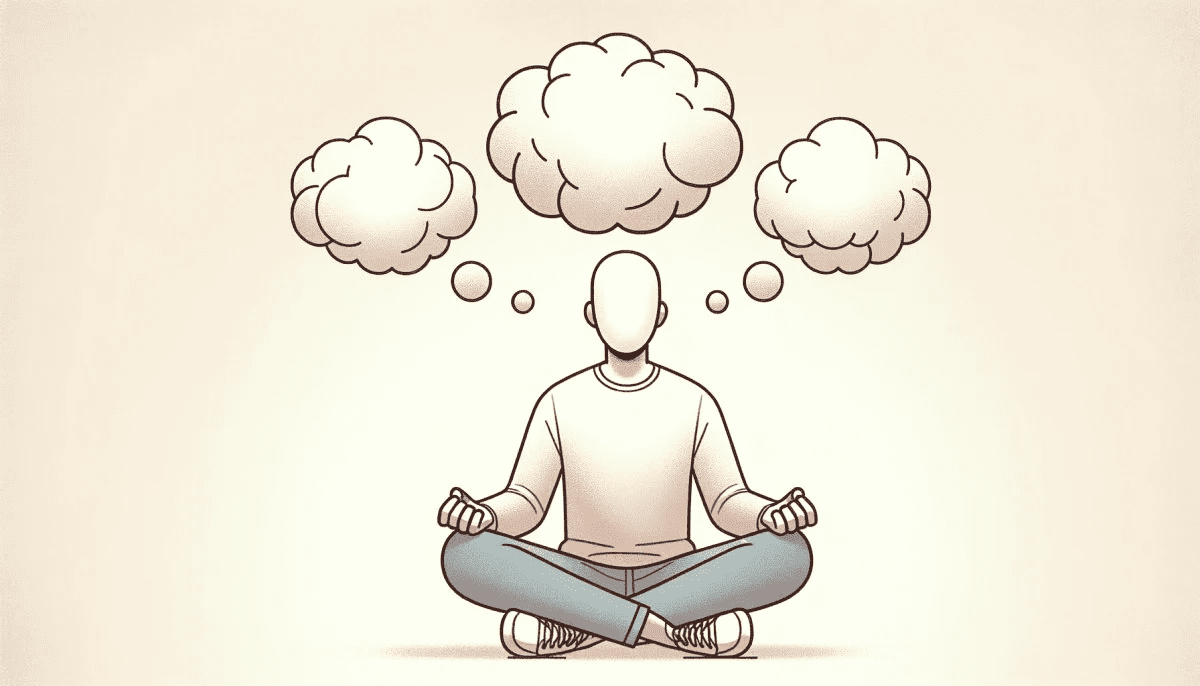

Have you ever noticed that there is a voice constantly talking inside your mind? It comments, judges, plans, worries, desires, and reacts—almost without stopping. This inner voice feels so close to us that we usually assume this voice is “me.”
But what if it isn’t?
“I’m The Ghost” is a deep yet simple exploration of thoughts, awareness, and self-identity. It invites you to observe how thoughts arise automatically, how the body reacts to them, and how the mind creates a sense of “I” without asking for permission. By watching this inner chatter carefully, a surprising question appears:
Who is actually thinking, and who is aware of those thoughts?
This blog does not offer beliefs or theories. Instead, it encourages direct observation of your own mind. As you read, you may begin to see that the “I” you identify with could be nothing more than an uninvited inner chatterer—appearing and disappearing like a ghost.
And if that is true…
Then who are you, really?
1. Observing the Continuous Inner Chattering
Observe closely and you will notice that there is a continuous chattering going on inside. If you become aware of it, you can clearly see that thoughts appear like clouds and then pass away. After a short pause, another thought arises. Along with thoughts, you can also observe how your body reacts automatically.
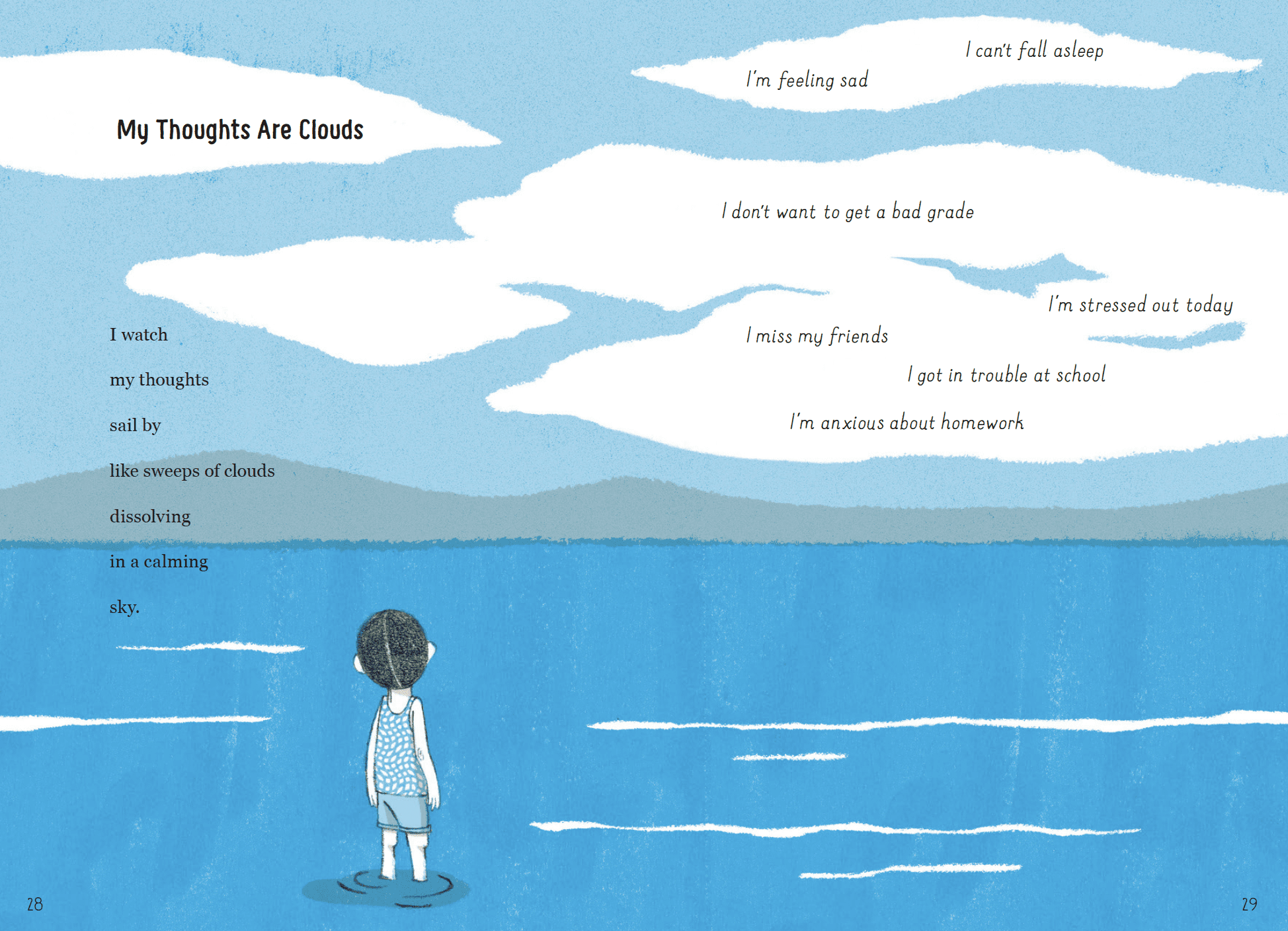
For example, suppose a thought of a delicious food you like appears. Immediately, your tongue starts to salivate, and a desire to have that food is generated. Thoughts can arise automatically—by reading something or seeing something—but if you observe minutely, you will notice that the thought comes first, then the body reacts, and finally the brain begins making plans to fulfill the desire.
When you observe the entire sequence, it becomes clear that this whole process works like a mechanical system.
So the question arises:
Who is the inner chatterer?
Who is thinking, desiring, and making plans to achieve the desired result?
Look inside carefully.
Do thoughts arise with your permission?
Can you control the thoughts?
Are they not depend upon the situation in which the body and mind present?
Are they not automatic?
And is not the intelligence that thinks or solves problems shaped by past experiences, memory, and brain function?
Or do they simply appear and disappear like bubbles?
If you can’t control your thoughts, can’t stop them, and they don’t ask for your permission before arising, then how can they be you? And isn’t the sense of control itself just another thought? Then who are you?
When emotions such as greed, jealousy, or anger arise, observe what happens. At that very moment, thoughts burst out like a volcanic eruption. The body experiences sensations, sometimes even shivers. Although it is difficult to remain aware during such emotional emergencies, if awareness is present, you can witness the automatic machinery of thoughts and reactions in action.
Or, after the emotional burst settles and calmness returns, observe the entire phenomenon again.
Then another question naturally appears:
Who is thinking, talking, and chattering inside?
Are these thoughts merely the output of the brain?
2. Are You The Conscious Decision Maker?
And even if you say that you are the conscious decision‑maker—the one who thinks clearly and takes decisions, when you are fully present in the moment—look closely.
Is that decision really coming from “you”?
Is it not your memory, conditioning, and accumulated experiences from childhood until now that activate in that moment?
Based on this stored intelligence, the brain functions automatically, evaluates the situation, and chooses what best suits the body and mind.
If decisions arise from memory, experience, and neural processing, then where exactly are you in this entire process?
3. Do You Identify Yourself With the Inner Chatterer?
Don’t you usually recognize yourself as this inner chatterer?
It feels emotions, desires things, and creates effects on the body.
Now observe carefully:
- You say, “This is my house.”
But are you the house? - You say, “This is my book.”
Are you the book? - You say, “My body is muscular.”
So, are you the body itself, or is the body merely in your possession? - You say, “My beutiful eyes.”
If the eyes are in your possession, then are you the eyes? - You often say, “Today my mind is feeling bad or boring.”
If you say my mind, then the mind is something you possess.
So are you really the mind?
Now look carefully:
Who is saying or thinking all this?
It is the same automatic inner chatterbox, continuously talking/thinking—blah blah blah. Isn’t it?
Then who are you?
4. Another Catch: Who Is Observing All This?
Here is another important catch.
Now look carefully!
Who is looking at all this so carefully?
Is it not the same inner talker?
This chatterer asks questions, inquires, finds answers, and understands. So in this entire process, where are you?
Even the question “Who am I?” is raised by the inner talker itself. Isn’t it?
Can this inner talker control thoughts or chattering? It seems impossible, because the thought of controlling is also produced by the same chatterer.
It often tries to control many things—such as cravings, bodily impulses, and greed. But the real question is: who is trying to control all of this? Look inside. When you try to control an impulse or change a habit, who wants to change it? Is it you, or is it the inner talker? Observe carefully and you will find your answer: the one who wants to control is the same inner chatterer. And because you identify yourself with that chatterer it feels like you want, the question remains—where are you?
Do you understand everything written here? Maybe yes, maybe no—but who understands?
The answer is: the inner chatterer understands. Isn’t it?
Yet, when awareness turns completely inward, sometimes you find nothing for a while—no thoughts, no chatter. Then, after some time, thoughts again appear on the canvas of awareness.
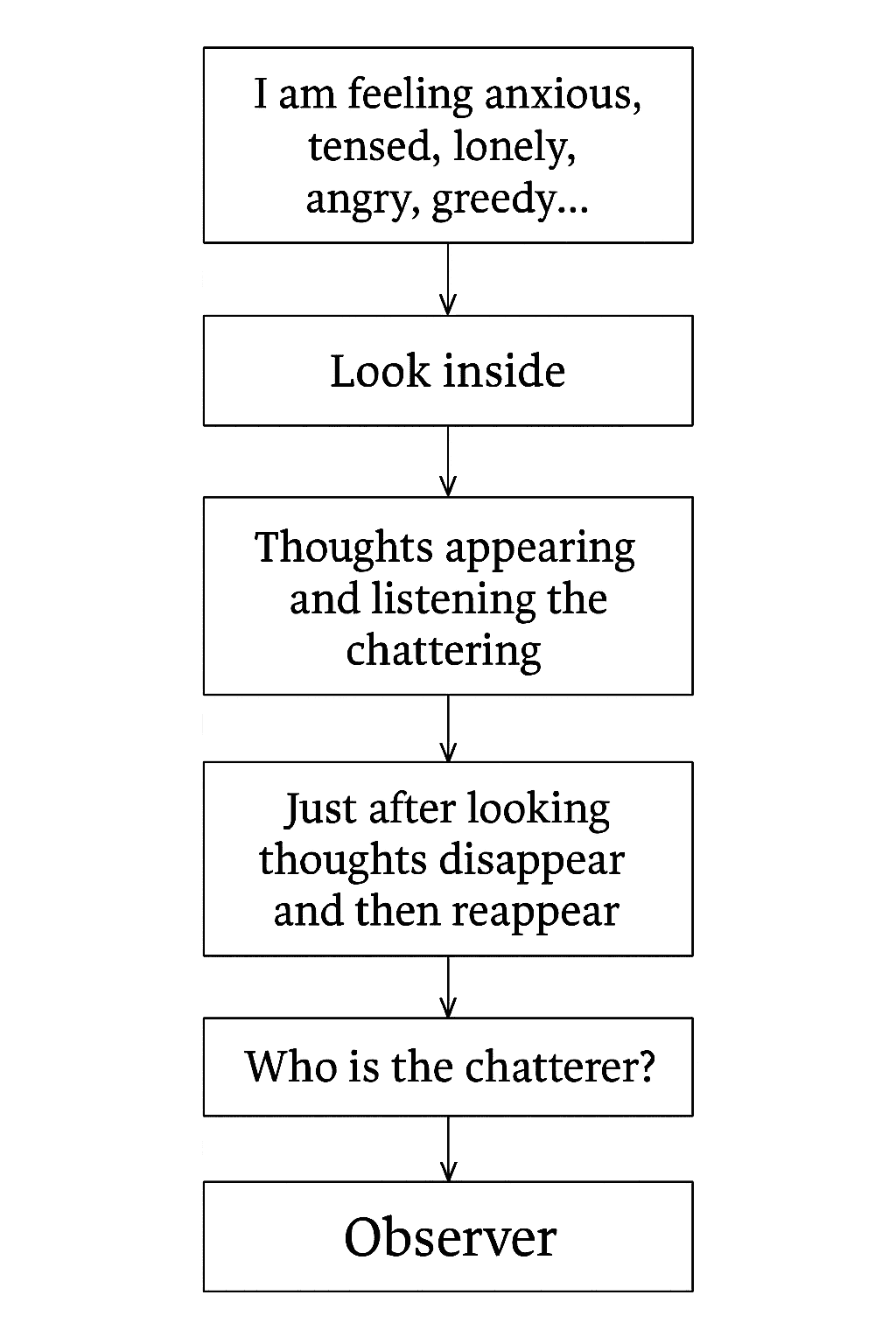
So the question returns once more:
Then who are you?
5. Who Are You in Deep Sleep and Dreams?
Who are you when you are in deep sleep?
There is no inner chatterer.
And when the chatterer is absent, you are absent.
In dreams, the chatterer is present, and therefore you are present. In dreams, this chatterbox creates its own world, where it fears, desires, and experiences everything as if it were real.
So what is real—the waking world or the dream world?
Where are you?
Who are you?
Just an uninvited inner chatterer.
You recognize yourself as this inner uninvited chatterer.
6. Why Do Thoughts and Emotions Lose Their Strength When Observed?
When you observe thoughts and emotions (anger, jealousy, etc.), they lose their strength. But why?Actually, when you observe, you can see that the inner chattering has diminished. And since chattering is the main cause of all reactions, the reactions lose their strength.
Now you may think:
“Okay! I will control my thoughts.”
But here’s a twist:
Is not the will to control thought itself also a thought?
This thought emerges automatically when thoughts (the observer) see that thoughts are coming automatically. So basically, it is all about thoughts. You are nothing but the accumulation of thoughts. Is it not so? Just erase or blank all thoughts at that moment — can you exist? You cannot even imagine, because imagination itself requires thought. In deep sleep, you are not, because there are no thoughts at all. When you are deeply engaged in something or reading something interesting, and there is no thought, then you are not present at that moment.
7. Why the Inner Chatterer Feels Like a Ghost
Can you find this chatterer?
No—because who will search?
The chatterer itself wants to search for itself. How can that be possible?
It feels mysterious, even spooky.
What is the source of this inner chattering?
Who is the chatterer?
How does it come and go without anyone’s permission?
Doesn’t this resemble a ghost?
Your mind defines a ghost as something uninvited guest that appears and disappears without your control . In the same way, thoughts arise and vanish on their own.
That is why there is a ghost—and you recognize yourself with it.
So you are the ghost.
I’m the Ghost.
Therefore, the feeling of “I” is nothing but the uninvited inner chatterer—the Ghost.
8.Illusion of Controlling Thoughts Is the Thought Itself
You can change your thoughts by changing the environment, so your thoughts are dependent upon circumstances. Now you try to change or control your thoughts by changing the environment. The thoughts will change, but the attempt to control the thoughts is also a thought. Due to that attempt to control the thought which is also a thought, your body starts changing the environment, and your thoughts change.
So in the whole process of changing thought, where are you? The entire phenomenon is carried out by thought itself. But when you are unaware of this very process, thought tells you that it is done by “me,” and you feel a sense of “I-ness,” that I am doing this. But thoughts are doing this. There is no you.
9. Thoughts and the Observer: Two Poles of the Same Consciousness
Now, who is observing the thoughts? Yes — that is also the same consciousness.
When this consciousness roams around the past and future, you call it being lost in thoughts.
When the same consciousness is in the present moment, you call it being vigilant, aware, or the observer of the observed.
But when you are totally in the present, there is no observed thing — you find nothing. Try to find out for yourself. Just try to observe now.
As soon as you attempt to observe the mind, you will find nothing.
And after some moment, a thought will emerge, and you will become lost in that thought or the observed things. Then, when awareness returns, you realize: “You were lost in thoughts.” So thoughts and the observer are simply two poles of the same consciousness.
As the observer becomes strong, thoughts become weak. And when thoughts become strong, the observer becomes weak. In a state of pure consciousness, there are no thoughts at all. And in a state of pure mind (complete identification with thought), no observer remains.

Always remain aware of your actions, thoughts, and emotions. You will find that you are not what you have thought yourself to be.
You are nothing but the accumulation of thoughts.
When there are no thoughts, there is no you.
So in this passage, the “I” is compared with a ghost. Why?
Because a ghost is fictitious, uncontrolled, and an uninvited imagination. And the “I” has the same nature — fictitious, uncontrolled, and an uninvited imagination of the brain.
You may be surprised to realize that excitement, sorrow, happiness, boredom, anger, jealousy, attraction, or repulsion—whatever you feel—is not you and not yours. First, these feelings arise. Then another subtle thought appears, claiming ownership of them. That thought says, “This is happening to me,” and creates the sense of “I-ness.”
It is something uninvited, automatic, and seemingly uncontrolled parasitic, which is called thought.
And what is happiness? And whose happiness is it?
The answer is: Happiness is nothing but thoughts. It is the thought’s happiness, not yours.
The same is true for sorrow, anger, and all other emotions.
So “you”, or “I”, are simply not — whatever exists is just thoughts.
Whatever is written here is simply the manifestation of thoughts; no “I” or individual has written any of this.
Conclusion:
With sustained awareness of thoughts and actions, thought liberates itself from its own constructs. The illusion of bondage dissolves, revealing that no one was ever bound and no one needed liberation. This is the freedom of thoughts from the thoughts itselves.
Bondage and liberation are themselves products of thought.
Always ask: To whom do all actions, reactions, and emotions appear? And who is the doer?
Then observe carefully.
From within, an automatic thought will arise, saying:
“All of this appears to me. I am doing, I am thinking, I am frustrated, I am delighted, etc.”
Then ask: Who is this “I”?
No answer will be found. Indeed, no answer can be told — because the questioner, the thinker, the knower, and what can be known are not separate. They are expressions of the same consciousness. Outside consciousness (the brain and material processes), there is nothing—though to say “nothing” is already to say something.
There is no independent “I.”
The “I” is merely an illusion created by thought.
The Question That Remains:
But what is the source of the thoughts or consciousness or the observer or the fleeting ghost?
What is the source of “I ‘m ness” or the feeling of “I“?
Well…
That is another story.


Pingback: What Is Happiness and Sorrow: Do They Really Exist or Are They Just Imagination of the Brain? - Mind-Analysis