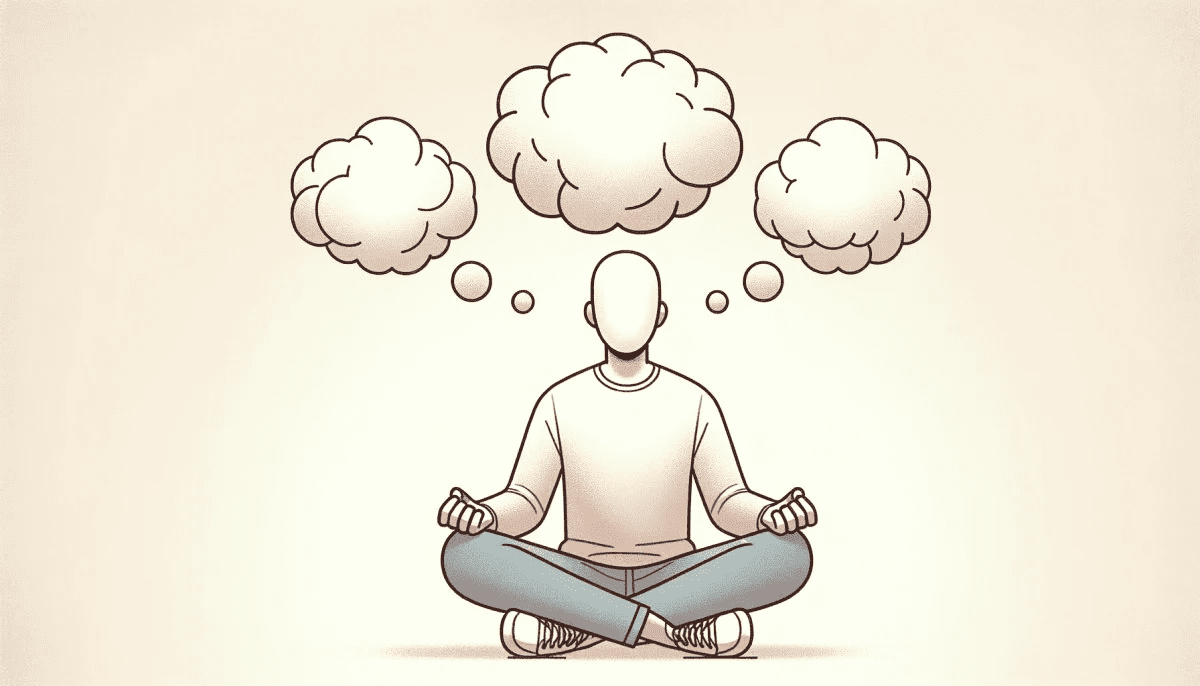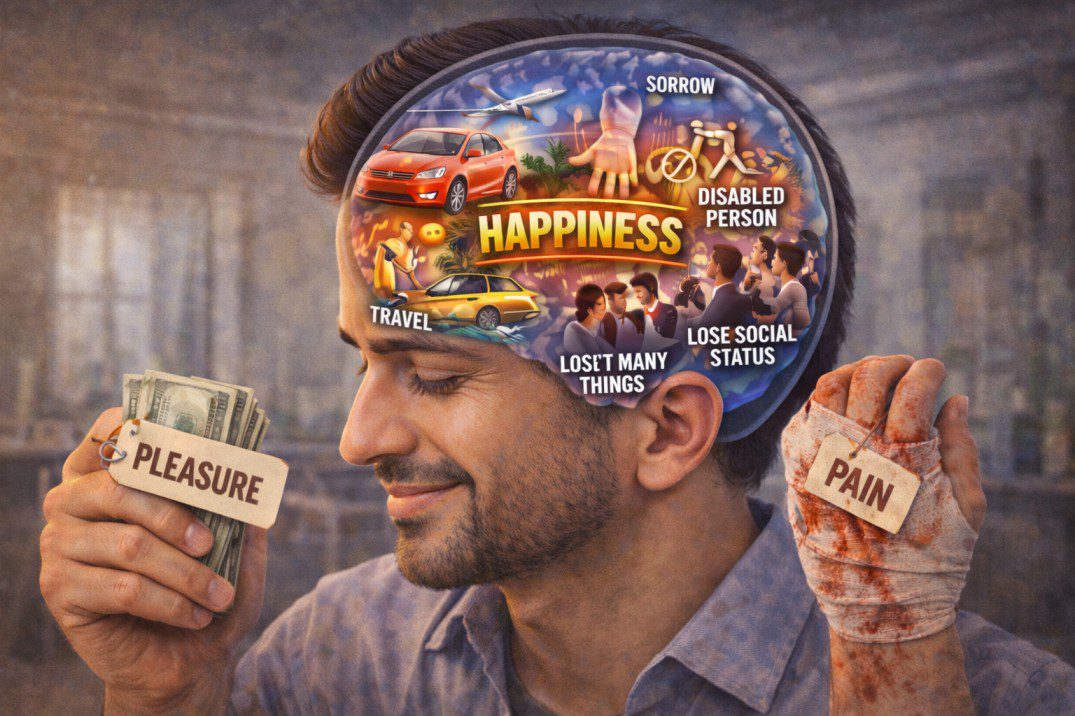

Explore whether free will exists. This detailed article examines determinism and free will through classical physics, neuroscience, logic, and quantum mechanics — with scientific and philosophical evidence.
Introduction: What Is Free Will?
Free will means the ability of a conscious being to make choices that are not fully determined by prior causes. In contrast, determinism means that everything is predestined by a chain of causes and effects — so real choices never truly occur.
This blog explores whether free will exists from four major perspectives:
- Classical physics
- Neuroscience
- Philosophy and logic
- Quantum mechanics
Classical Physics: The Universe Runs on Cause and Effect
From classical physics, every effect has a cause.
If we know all the laws of nature (physics, chemistry, biology, psychology, economics) and every initial condition, then in principle everything — including human behavior — could be predicted. That is the classical deterministic worldview. Ethics Journal
For example:
- If we know a ball’s velocity and position, we can predict where it will be.
- Using the same laws, we can predict tides, cyclones, eclipses, and even complex weather patterns.
- In theory, if we knew all variables about a person — genetics, environment, conditioning — we could predict what they will do years from now.
This idea is reflected in Laplace’s Demon, a thought experiment based on Newtonian physics:
If an intellect knows the precise location and momentum of every particle in the universe, then the future and past could be known with certainty. The Rational Pessimist
This view treats the universe like a tape recorder:
- The “tape” is written
- The “tape” plays forward
- Nothing can be otherwise
Einstein on Free Will
Albert Einstein strongly rejected free will in the philosophical sense. In his own words:
“People are like puppets on strings, controlled by invisible forces.”
“Man can do what he wills, but he cannot will what he wills.”
Einstein agreed with the view that our choices are governed by prior causes — internal and external — and thus not genuinely free in the deepest sense.
Why Behavior Appears Predictable
A person’s behavior depends on:
- Genetics
- Brain structure and function
- Environment
- People they interact with
- Books they have read
- Family and social conditions
Different people react differently to the same situation only because their conditioning is different.
For example:
If someone thinks:
“Since everything is predestined, I’ll just chill and not work,”
…and they later spoil their future, that outcome was also predestined. The belief in predeterminism becomes part of the causal chain that produces the result.
Whatever you think, do, or choose is simply a link in a long chain of causes and prior conditions. This aligns with the view that decision-making is a physical process, and not a free, uncaused choice. Ethics Journal
Neuroscience: Decision Follows Neural Activity
Modern neuroscience shows that neural firing precedes conscious decision-making.
Before you consciously feel that you have decided:
- Your brain has already initiated the action
- Neural patterns associated with the future decision fire first
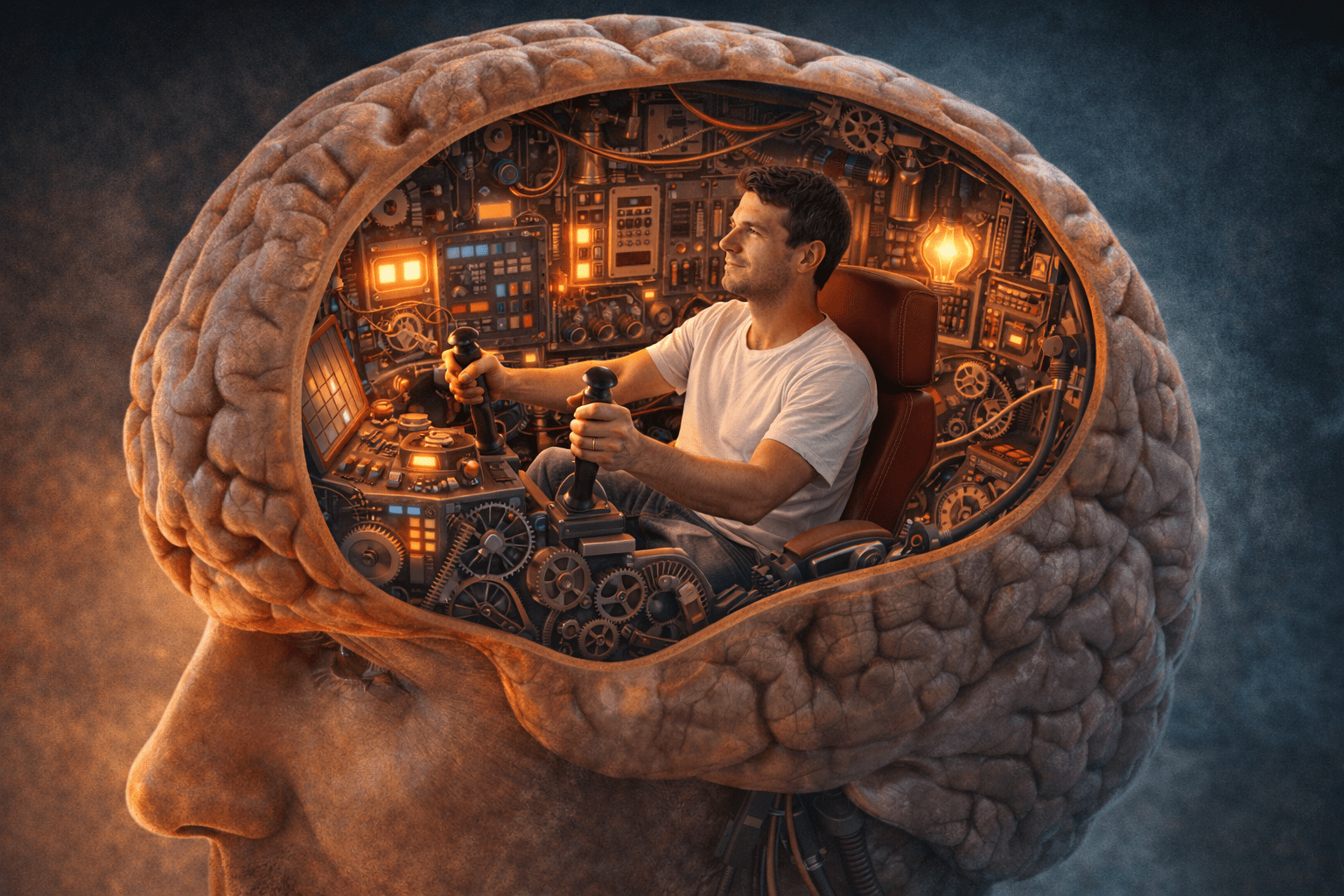
This supports the idea that conscious awareness follows neural processes, rather than initiating them. It suggests that what we feel as free choice is only awareness of something already underway — an interpretation supported by cognitive science research. The Basic Theory of the Mind
The conscious experience of deciding is real as awareness, but not the cause of the decision itself.
Basic Logical Reasoning: The Will Is Conditioned, Not Free
When we think, we rely on:
- Experiences we have seen
- Things we have learned
- Thoughts stored in memory
We cannot think or imagine beyond our brain’s conditioning.
Our desires, preferences, and will are all constrained by:
- Brain wiring
- Past experiences
- Cultural background
- Biological makeup
Thus:
- The will itself is not free
- It is a product of prior causes and conditioning
Moreover:
- We did not choose our birth
- That outcome was determined by biological circumstances like sperm competition and ovum position
So from the very origin of existence to every subsequent thought, choice appears to be determined.
Quantum Mechanics: Uncertainty But No Choice
Quantum mechanics shows that at a microscopic level:
- Events are probabilistic
- Identical initial conditions can lead to different outcomes
- Predictability is replaced by statistical probability
This might seem to hint at free will — but randomness is not choice. Randomness means outcomes cannot be predicted or controlled, and cannot be directed by an agent.
For example:
- When a photon of light hits a surface, it may be refracted(say, 80%) or reflected(say, 20%) with certain probabilities.
- You cannot say which event will occur for a single photon — only that there is an 80% chance of one outcome and 20% of another
That is quantum randomness — not free choice.
Quantum mechanics undermines strict determinism, but it also does not provide a mechanism for conscious choice. It replaces certainty with randomness, but randomness alone cannot be the basis of free will. scientificamerican.com
Neural Decisions and Quantum Uncertainty
Decision-making in the brain arises from:
- Neural firing
- Synaptic transmission
- Electrochemical processes
At a microscopic level, these processes involve electrons and molecules whose final states are influenced by quantum probabilities. But probabilities are not choices — they are statistical tendencies. There is no agent controlling the outcome. This means:
- The universe is neither strictly predetermined
- Nor is it governed by conscious free will
- The randomness introduced by quantum uncertainty does not grant agency or control
This conclusion is supported by the classic philosophical dilemma:
If determinism is true, free will is impossible; if indeterminism (randomness) is true, then choices are random, not controlled. Wikipedia
Conclusion: Free Will Is an Illusion
From the evidence examined:
Classical physics suggests that everything is caused by prior events, and that each action depends on present conditions. In this way, all events are determined by the principle of cause and effect.
Neuroscience reveals that decisions follow neural processes: before any decision appears in consciousness, it has already been initiated at the neural level. For example, when you think you are drinking water by your own free will, the neural processes leading to that action have already occurred milliseconds before the intention enters consciousness.
Basic reasoning also shows that the will is limited by the brain’s capacity. One cannot will beyond the limitations of one’s brain. Our intentions are shaped by past experiences, brain structure, genetics, and environmental influences.
Quantum mechanics introduces randomness, but random outcomes do not amount to controlled choices. Randomness is not something over which anyone has control, so it does not constitute free will. If events are random, they are not freely chosen; instead, they are not determined by strict laws but occur probabilistically at the microscopic level. Thus, neither predeterminism nor free will exists; rather, the world operates with fundamental randomness, as described by quantum mechanics.
The universe at the micro level is random, and at the macro level appears law-governed.
In every cases, there is no space for free will as traditionally understood.
Instead:
- Decisions are outcomes of causal processes
- Conscious awareness is a witness, not an originator, not a doer.
- Free will is a psychological illusion
Thus, while life feels like choices are free, scientifically and philosophically, free will does not truly exist.
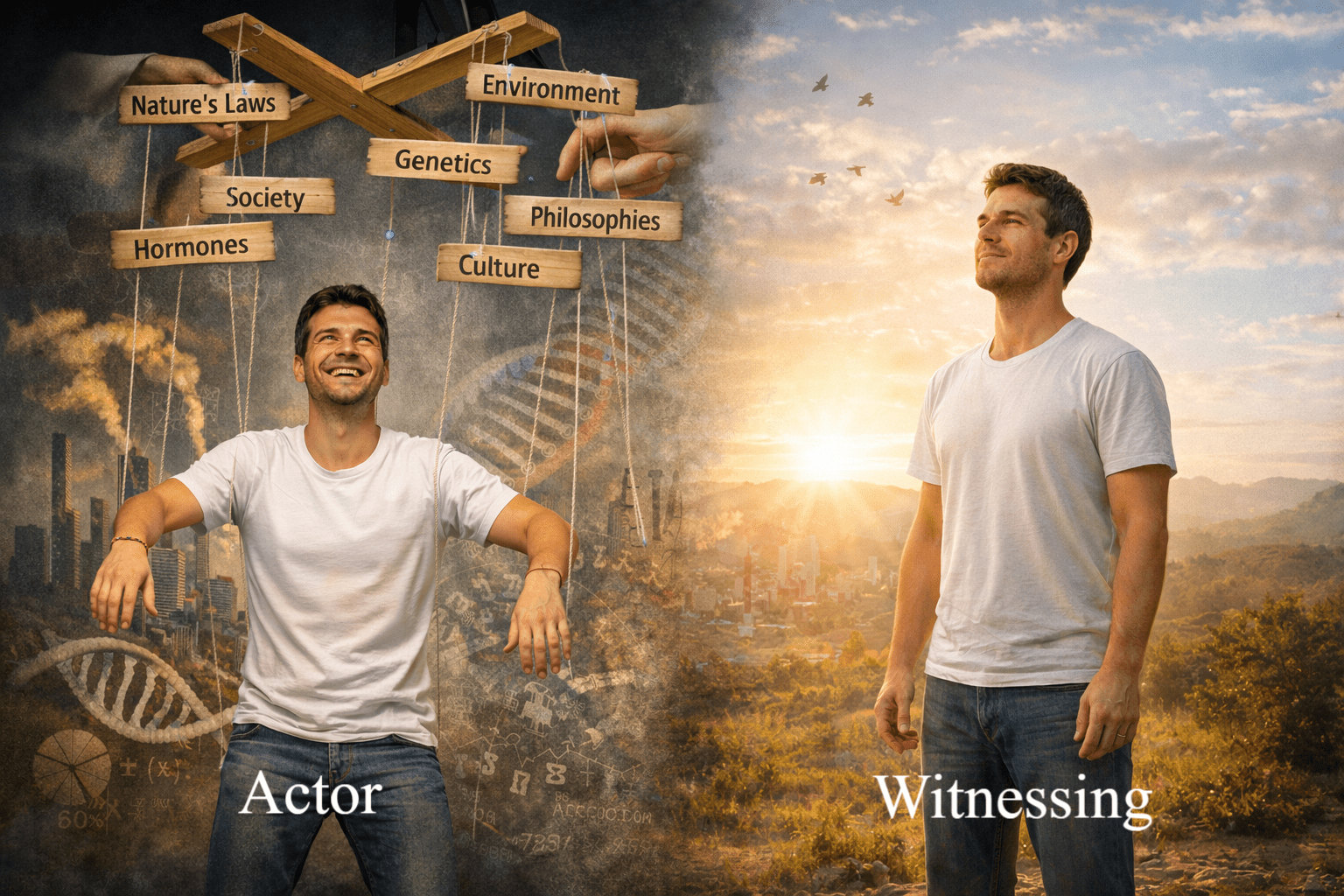
And this is the beauty of nature: we do not have free will. When this reality is truly felt, one naturally becomes a witness—simply watching the whole game of life, nature’s play, without attachment or detachment. Then there is nothing to worry about, nothing to be overwhelmed by. The witness remains equanimous in every situation.
So live life without worry. Everything is happening on its own; you are only witnessing it. Witness joyfully. Your body and mind will take care of the rest beautifully—they will manage situations and solve problems naturally. We often become depressed because we believe we are the doer, and in this sense of doing, stress arises. When the sense of doership dissolves, the same actions continue to happen, but without stress.
If there is neither free will nor predeterminism, then no individual agent or ultimate ruler of the universe truly exists. Everything is simply happening on its own. When it is clearly seen that you do not exist as a separate controller, all personal burden falls away. This recognition is real freedom—the freedom of non-existence of the self. Happiness and sorrow are no longer “yours”; they are movements of impersonal, random nature. With this understanding, living becomes effortless and simple.